Easement Search
A certified abstractor searches the county land records against the parcel and reports the easements found of record over the term you select, with a copy of each recorded instrument attached so you can read the grant itself.


Certified title abstractors nationwide since 1995
When it comes to real estate, understanding property easements is crucial for property owners, buyers, and real estate professionals alike. Easements can significantly affect how a property is used and what it is worth. AFX Research searches the county land records against your parcel and reports the easements found of record, with a copy of every recorded instrument attached.

The Short Version
A property easement is a right held by a person or an organization to use part of someone else's property for a particular purpose. Easements arenon-possessory: holding one does not make the holder an owner. What an easement grants is a use of the land, such as access for a utility line or a pathway across a lot.
Understanding easements matters in real estate because they affect both land use and value. A house may carry a utility easement that lets the utility run and maintain lines across it, which can rule out building in that strip and can weigh on how the property shows to a buyer.
Most easements that bind a parcel were created by a document recorded in the county land records. That is what an easement search reads.
Our Services
Every report is drawn from the county land records by a certified abstractor and returned with the recorded instruments attached, so the grant itself is in front of you rather than somebody's summary of it.
A certified abstractor searches the county land records against the parcel and reports the easements found of record over the term you select, with a copy of each recorded instrument attached so you can read the grant itself.
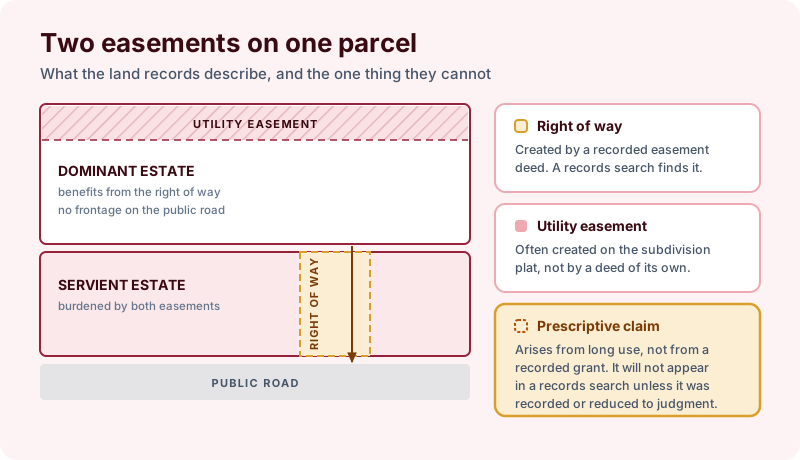
Where access runs across a neighboring parcel, we look for the instrument that created it, so a driveway that has always been used can be matched against a right of way that was actually recorded.
Copies of the recorded easement deeds, plat maps, and related instruments referenced in the report, pulled from the county record so the exact language and the mapped location are in front of you.
Know What You Are Looking At
Easements divide first by who benefits, and then by what the holder is allowed to do. These four are the ones that turn up most often in a residential search.
An easement appurtenant benefits one parcel, the dominant estate, and burdens another, the servient estate. It attaches to the land rather than to a person, so it ordinarily passes to the next owner of each parcel when either one is sold.
An easement in gross is a right held by a person or a company rather than by a neighboring parcel. There is a burdened property but no benefited one, which is why utility easements take this form.
A utility easement gives a provider the right to install, access, and maintain electric, gas, water, sewer, or telecommunications infrastructure across private property.
A right-of-way grants passage across a parcel. It can serve a neighbor, a utility, or the public, and it is the easement most likely to be load-bearing for whether a parcel is usable at all.
Why AFX
AFX Research is a trusted leader in property records and title document research, searching land records nationwide since 1995. Three decades of practice, attention to detail, and a commitment to getting the record right are what set us apart.
With nearly three decades in the industry, our abstractors know how easements are indexed, mis-indexed, and buried in plat references, and how recording practice differs from one county to the next.
Every easement we report carries its recording date, book, and page, with a copy of the recorded instrument attached. Nothing in the report asks you to take our word for it.
Whether you need a 20, 30, or 50 year easement search, you pick the window that fits the parcel and the question, rather than paying for depth you do not need.
Our team works in the county offices, going into historical records and plats to find easements that never made it onto the current deed.

How to Order
Ordering an easement search online is quick for a residential property. Here is how it works.
Enter the street address, city, county, and state. An APN (Assessor's Parcel Number) is not required, but it removes any ambiguity about which parcel to search, and it helps most in counties with repeated street names.
Pick a 20, 30, or 50 year term. The longer terms reach back toward the original platting of a subdivision, which is often where the utility and drainage easements that still bind a lot were first created.
Submit the form and a certified abstractor begins the search. Standard easement searches are completed in 2 to 3 business days, and rush service is available when a closing date is close.
Your report lists the easements found of record with recording dates, books, and pages, and it comes with copies of the recorded instruments attached, so you can read the actual grant rather than a summary of it.
If the parcel is commercial, or the question is narrower than a standard term search, tell us what you are trying to establish and we will scope a custom search before anything is ordered.
If a report is found to have a substantial records discrepancy caused by our research, we confirm it and refund the search. Read the full terms.
Common Questions
Certified abstractors search the county land records against your parcel and report the easements found of record, with a copy of every recorded instrument attached. Order online in minutes, or tell us about the parcel and we will help you pick the search term.
Questions? Call 877-848-5337 ext. 138 or send us a message