

· AFX Research
What Is a Right-of-Way Easement, and Who Gets to Use It?
What a right of way permits, who holds it, why a driveway in daily use is not proof one exists, and what the county land records can confirm before you buy.
Table of Contents
A right-of-way easement is the recorded right to cross someone else’s land to get somewhere. It is the most consequential easement type we report, because for a parcel with no frontage on a public road it is the difference between land you can reach and land you cannot. It is also the one buyers most often assume is settled, because they can see the driveway. Seeing the driveway and finding the grant are two different things, and only one of them survives a dispute. Our guide to the types of property easements covers the wider family; this one stays on rights of way.
What a right of way actually grants
A right of way is narrower than most people expect. The recorded instrument defines four separate things, and each of them can be the point on which an argument turns.
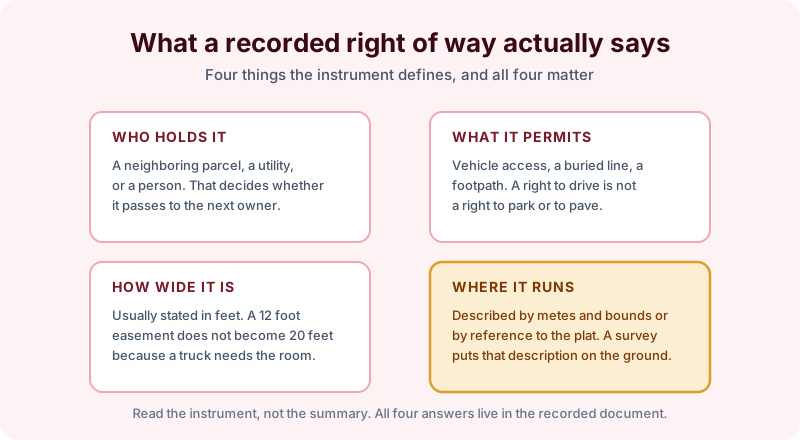
The permitted use is where people get caught out. A right to pass and repass is not a right to park on the strip, to widen it, to pave it, or to run a water line under it. A 12-foot easement stays 12 feet wide even when a delivery truck needs 14. What the document says is what the holder has.
Who holds it decides who keeps it
The second question is whether the right belongs to a neighboring parcel or to a person. An easement appurtenant benefits a particular piece of land, so it travels with that land: sell the benefited parcel and the buyer takes the right, sell the burdened parcel and the buyer takes the burden. An easement in gross belongs to a person or a company instead, which is the form utility easements take.
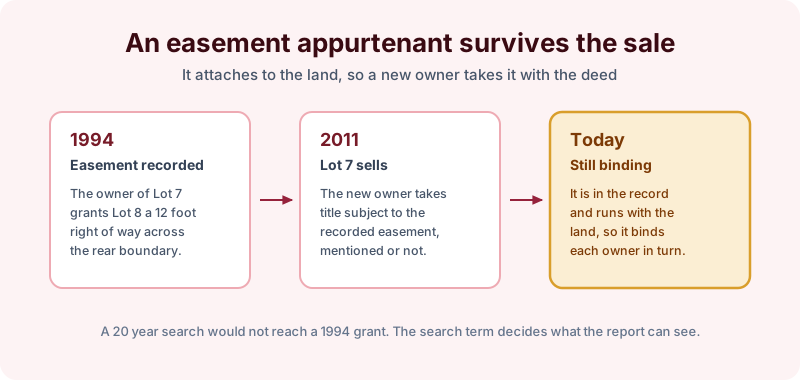
This is why an easement recorded decades ago is still live today, and why nobody has to mention it at closing for it to bind you. It also explains something about search terms: a right of way created when a parcel was split in 1994 will not appear in a 20-year search, because the search window simply does not reach it.
A driveway in daily use is not proof
The most common thing we are asked is some version of “the driveway has always been there, so there must be an easement.” Sometimes there is. Sometimes the arrangement was a handshake between two owners who are both long gone, and nothing was ever recorded.
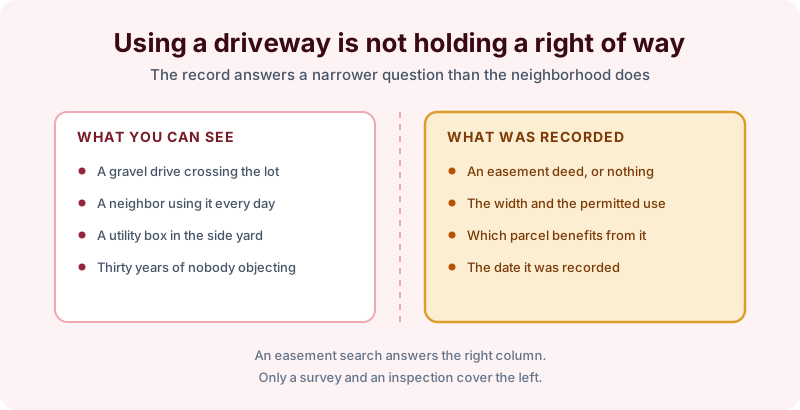
Long use can matter legally. A prescriptive easement can arise from open, continuous use without permission, and an easement by necessity can be implied when a parcel is split without access. But both are created by conduct or by operation of law rather than by a recorded grant, and unless one has been reduced to an instrument or a judgment that was recorded, no search of the land records will show it. Whether such a claim would succeed is a question for an attorney licensed in that state.
Where the grant is written down
When a right of way does exist on the record, it is usually in one of a few places: a separate easement deed, a recital in a deed that split the parent parcel, or the subdivision plat. That last one is easy to miss, since a strip drawn on a plat filed in 1971 may never be mentioned on any deed since. Following those references is the work — see how an easement search runs for what that involves.
The takeaway
Before you rely on access, find the instrument, then read it: who holds the right, what it permits, how wide it is, and where it runs. The record can confirm all four, or tell you that nothing was ever recorded, which is its own useful answer. Start the order online and pick a search term that reaches back past the split that created the parcel, or send us the address and we will tell you what a search of that scope would and would not cover before anything is ordered.