

· AFX Research
How to Find Out What Easements Are Recorded on a Property
Where easements actually get written down, why the current deed is not enough, how to choose a 20, 30, or 50 year search term, and what a survey adds that records cannot.
Table of Contents
Most people start by reading the deed, find no mention of an easement, and conclude the parcel is clean. That conclusion is usually premature. Easements are frequently created by documents the deed never references, filed years before the current owner bought the place, and indexed against somebody else’s name. Finding them means searching the land records rather than reading one document. If you are specifically chasing an access question, our guide to right-of-way easements covers that case in more detail.
Start with what you already have
Pull together the street address, the county, and the APN (Assessor’s Parcel Number) if you have it. If you have a copy of the current deed, read the legal description rather than the address: addresses get re-assigned and repeat within a county, while the legal description identifies the parcel the recorder’s index actually uses.
If the deed contains a phrase like “subject to easements and restrictions of record,” treat it as a flag rather than a finding. It tells you nothing about what those easements are, and it appears on deeds for parcels with none.
It also helps to know what you are looking for. A utility easement, a drainage easement, and a right of way are recorded differently and turn up in different places, so a quick read of the eight easement types will tell you which ones are plausible for the parcel in front of you. A rear-lot utility strip is near-universal in a platted subdivision; a conservation easement is not.
Four places an easement can be written down
The current deed is one of several places a burden can live, and it is the one most likely to be silent.
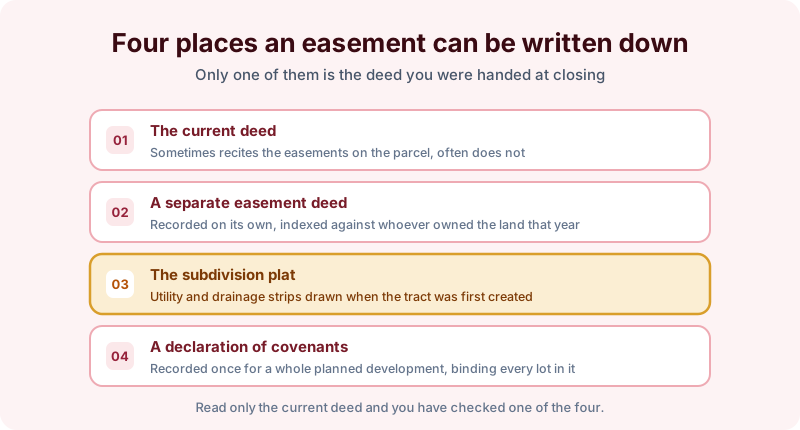
The subdivision plat is the one that catches people. When a tract is first created, the utility and drainage strips are drawn on the plat and recorded once, for the whole subdivision. Individual lot deeds afterward may never mention them. A search that reaches the platting finds them; a search that stops short does not.
Choosing how far back to search
This is the decision that most affects what your report contains. The useful question is not “how many years do I want” but “how old is the paperwork that created the burdens on this parcel.”
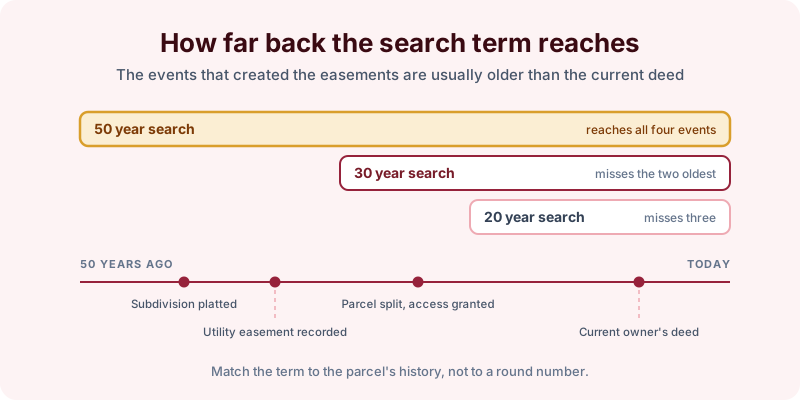
A rough guide: a 20-year search suits a lot in a recent development where the recorded history is short. A 30-year search reaches back toward the platting of most postwar subdivisions. A 50-year search is the one for land, for parcels that have been split or assembled, and for any unresolved access question, because the arrangement usually dates from the split. The three search terms are priced here; if you are unsure, give us the address and we will tell you which one we would order.
What the records cannot tell you
A records search is precise about one thing and silent about another, and it is worth being clear which is which before you rely on it.
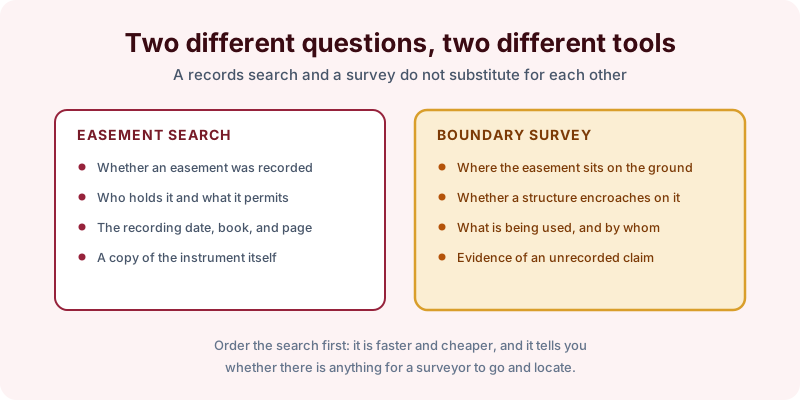
A search reports what was recorded. It does not locate an easement physically, which is a surveyor’s work, and it will not show a claim that was never written down, such as a prescriptive easement arising from long use. A clean report means nothing was found of record for the term searched — it is not proof that a parcel is unburdened. Recording and indexing practice also varies from county to county, and a record the county indexed under a misspelled name may not surface under the parcel it belongs to.
That is an argument for ordering both tools where the stakes justify it, and for reading the report as what it is: the recorded picture, documented and cited. Every easement we report carries its recording date, book, and page, with a copy of the instrument attached, so nothing in it asks you to take our word for it — our process walks through how that is put together.
The takeaway
Do not stop at the deed. Search the land records over a term that reaches back past whatever event created the parcel, read the instruments themselves, and pair the result with a survey when something on the ground does not match. Start the order online, or send us the address and the county and we will tell you which search term fits and what it would and would not cover before anything is ordered.